
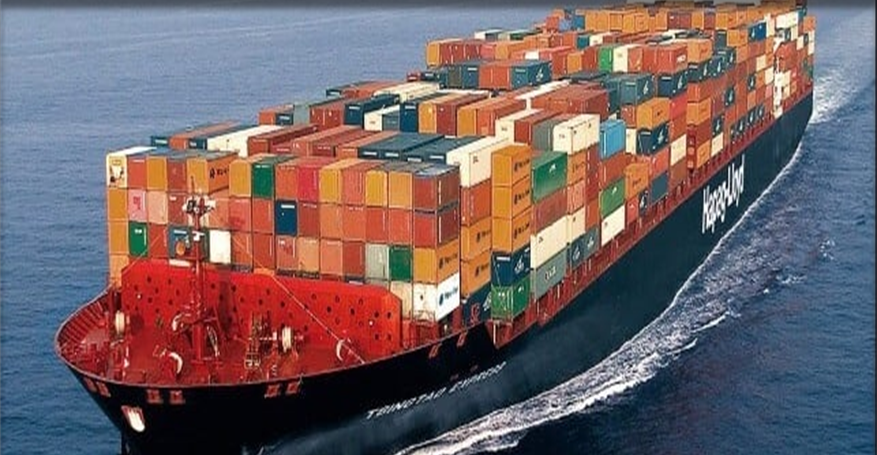
We have partnered with Happag-LLoyd to offer International shipping and customs. From door to door, all inclusive services.
Choose from the best option to ship or contact us for our professional advice:
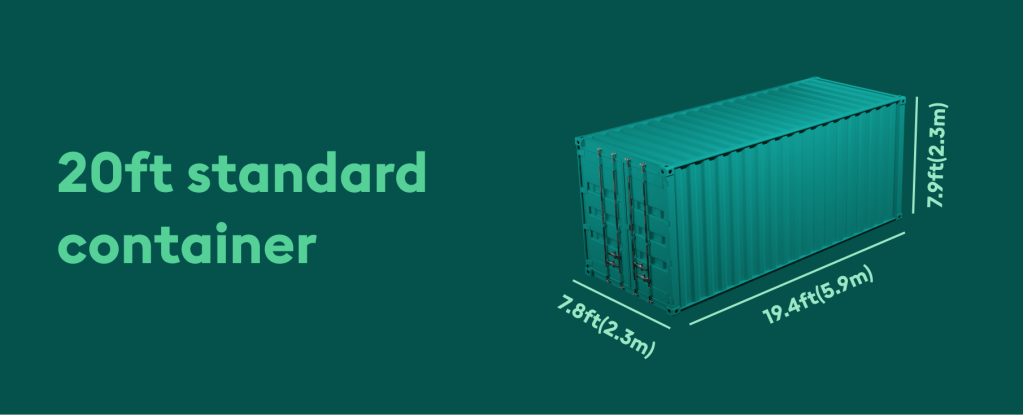
The 20ft container is one of the most popular container sizes in the market. If you’ve got smaller shipments, this container is perfect for you. Due to its lightweight nature, the 20ft is easily stackable, and quick to load and unload. This makes it a great option for intermodal transport (moving cargo between ships, trucks and trains).
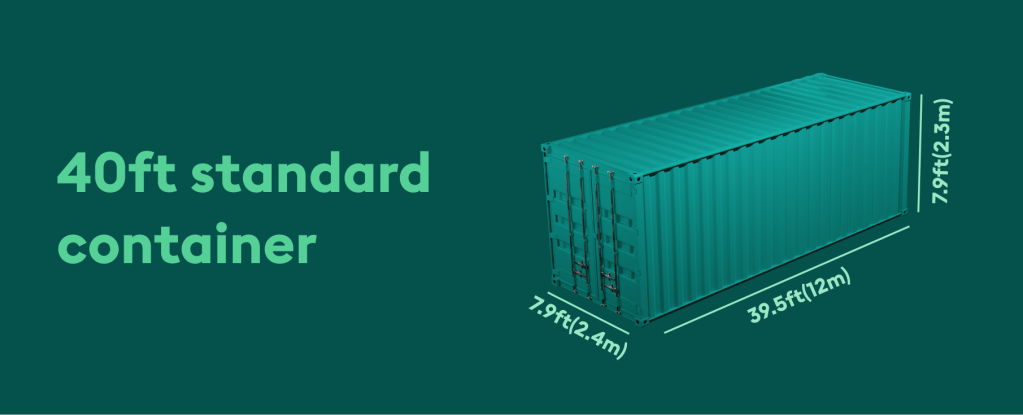
40ft dry container
If you have cargo that won’t fit inside a 20ft unit, opt for a 40ft container instead. These offer more space for your cargo. As a result, many companies also use 40ft containers for storage.
It’s also more cost-effective to buy one 40ft container, rather than two 20ft units, as one 40ft is usually only around 30% more expensive than one 20ft.
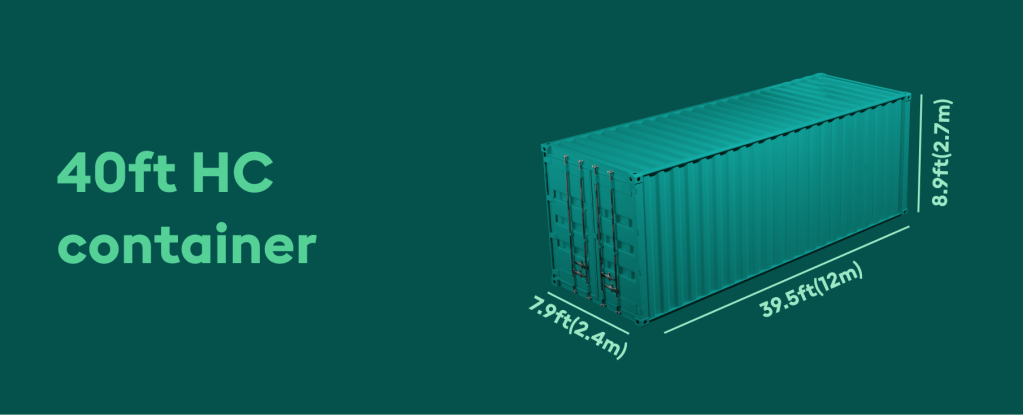
40ft HC container
The 40ft high cube is the most popular high cube size in the market. If you’ve got dry goods that won’t fit into a standard 40ft unit, this container is the answer. Plus, it’s usually only marginally more expensive than the standard 40ft container.
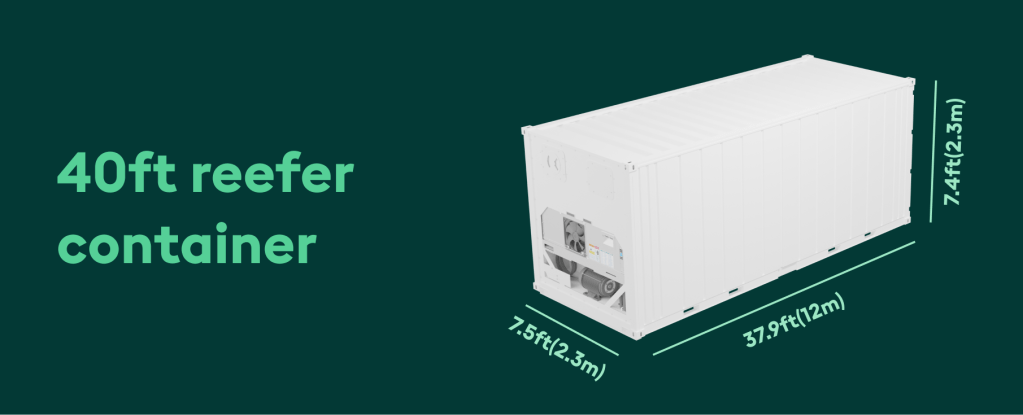
Reefer containers are special containers with built-in refrigeration. They’re designed to transport temperature-sensitive, perishable and frozen goods.
Refrigerated ISO containers have T-shaped decking on their floors. This pushes air around the container, keeping the temperature inside constant. Reefers can maintain any temperature between 30 degrees and -30 degrees Celsius.
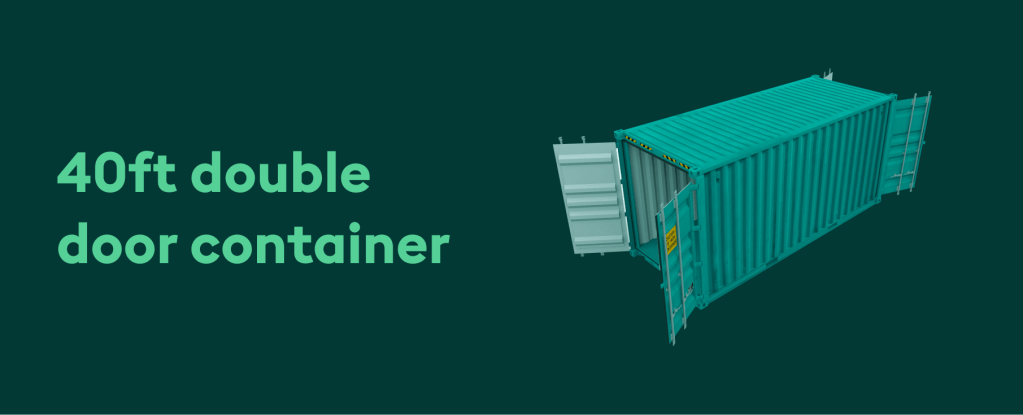
Double door containers have doors that swing open on both ends. This container type is also known as a ‘tunnel container’. The double doors make loading and unloading cargo quick and easy.
For instance, if you want to load cars, you can drive them in one end during loading, and out of the other at the final destination. No need for awkward maneuvers.
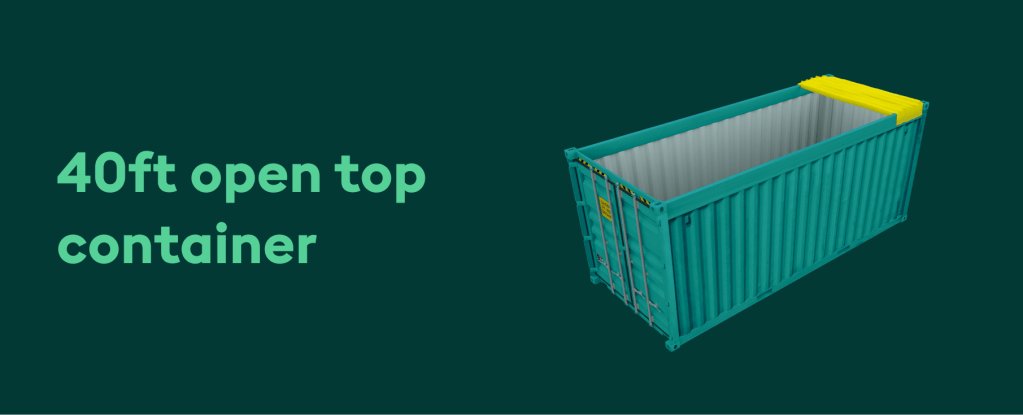
Open top containers, as the name suggests, have an open top. The roof is covered with a detachable tarpaulin sheet instead of having a solid roof.
Open tops are used when your cargo is too large to fit in a standard unit. For instance, machinery or heavy materials that can’t be stowed sideways, and need to be loaded from the top with a crane.

A pallet wide container is a special unit designed to accommodate Euro pallets.
While a 20ft dry container can carry 11 Euro pallets, a 20ft pallet wide can carry 15. This is possible because pallet wide units are approximately 5m wider on the inside than standard containers.
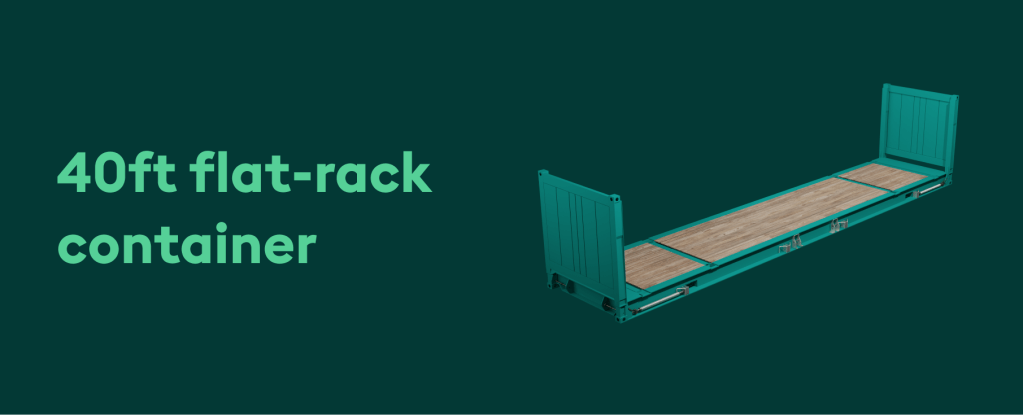
Flat rack containers only have walls on their shorter ends. They’re used to transport bulky and oddly shaped cargo that needs to be loaded from the top or sides. Such cargo may include pipes, poles and large machinery.
Flat rack containers are built with strong corner posts and reinforced frames in order to withstand heavy loads and provide stability during transportation.
The biggest advantage of this container type is its versatility. You can load a flat rack container with almost any size or type of cargo as long as it meets the payload criteria.
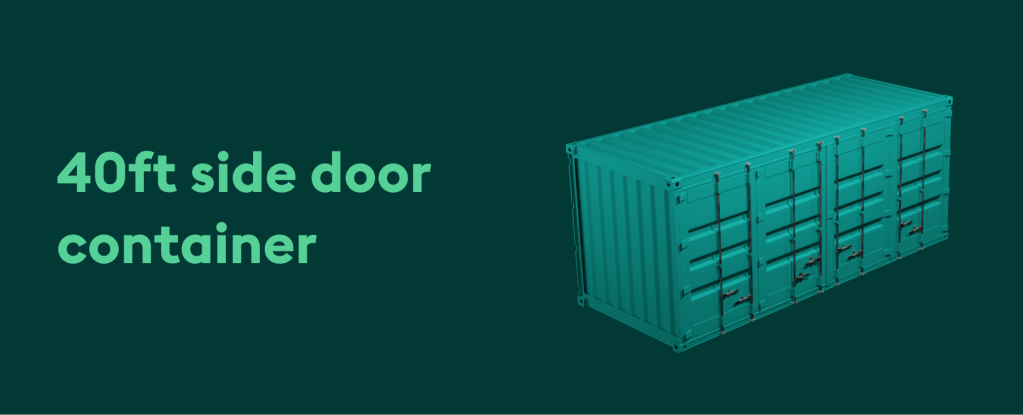
A side door container, also known as an ‘open side’, has extra doors that open on its long side. These doors make it extremely convenient to load bulky cargo that can’t fit through standard container doors.
Side door containers also make loading and unloading quick and efficient as more workers can handle cargo at the same time.
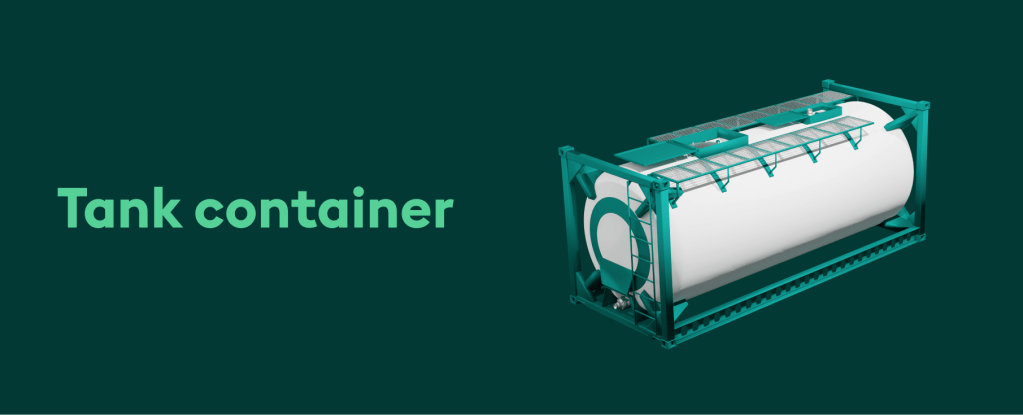
Tank containers, also known as tankers or ISO tanks, are cylindrical units used to transport dangerous goods, gasses, and liquids.
Each tank goes through a thorough inspection before it’s allowed to carry goods. All tank containers must comply with the size, durability, and strength requirements as per the ISO standards.
 OCG Logistics